Almost every week someone messages me with the same question: where should I learn sound healing? Some are yoga teachers or massage therapists. Some have never touched a singing bowl. Some just came out of a sound bath and felt something they want to understand.
If you are looking for a sound healing training in Thailand, you have more choice than ever. That is good news, but it also makes it harder to know which training is right for you.
I teach sound healing practitioner training at my studio in Bangkok. This is the guide I would give a friend before they book any training, mine or someone else’s.
Why learn sound healing in Thailand
Thailand has a strong wellness culture and many experienced teachers, and it is an easy place to spend a few focused days learning. Many of my students fly in from abroad and plan the training as part of a longer stay. Others live in Bangkok and want to add something real to the work they already do.
Wherever you train, the location matters less than the teacher, the format and how much you actually practise. Those are the things to look at closely.
What a good sound healing training should teach
A training should leave you able to hold your own sessions, not only understand how they work. I think of it in four parts.
Understanding. What the bowls are, how they work, and why they create the results they do. When someone asks you a question after a session, you should be able to answer it simply and honestly.
Technique. The hands-on skill to play the bowls properly, build a session, and guide people through it from start to finish.
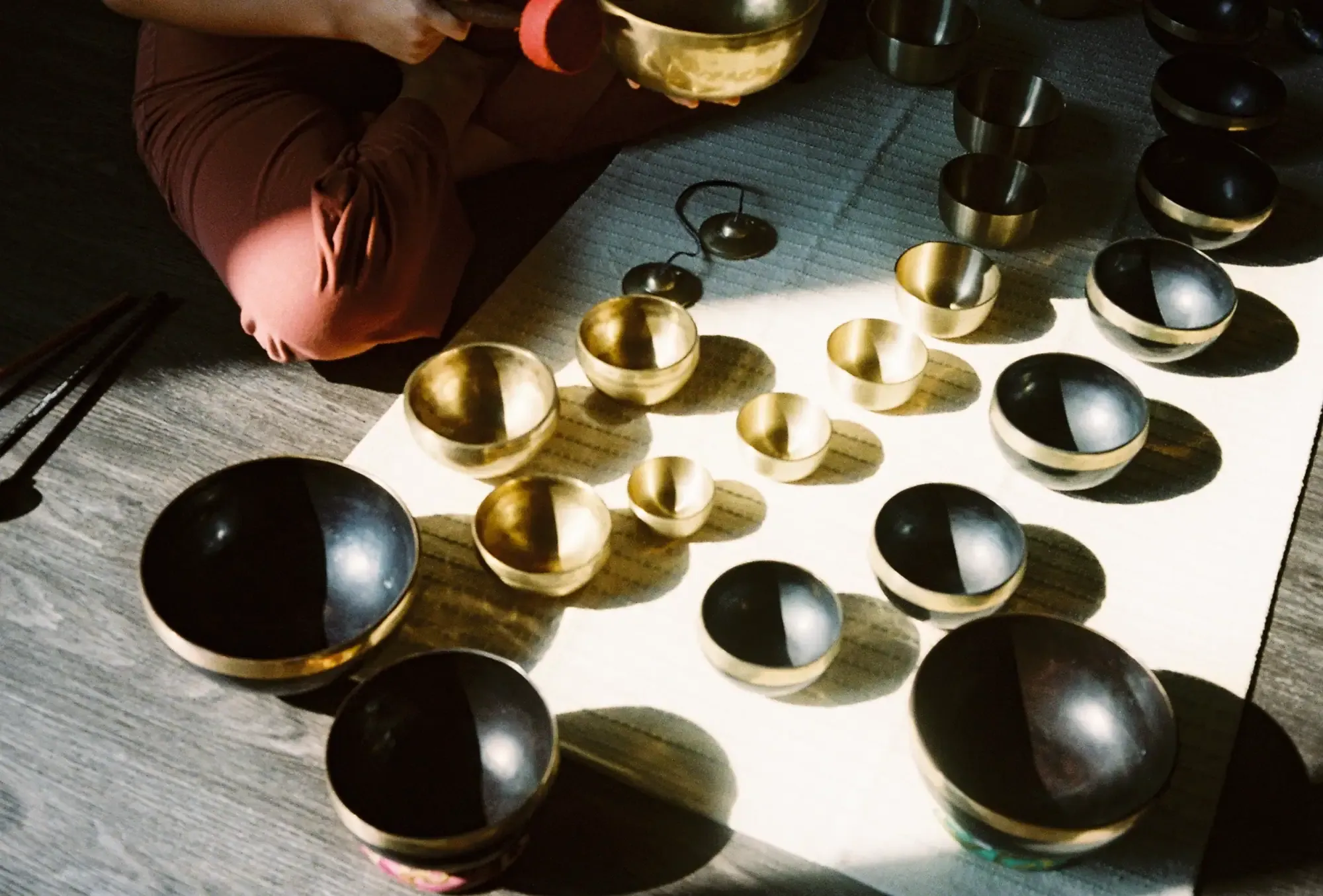
Instruments. How to choose the right bowls for your own practice. This saves you money, because you buy what you need instead of what looks good in a shop.
Practice. Time giving and receiving sessions during the training itself. This is where the knowledge becomes yours.
Questions to ask before you book
These are the questions I would ask any school, including mine.
How much of the time is hands-on? A training can be full of theory and still leave you nervous to play. Ask how many hours you spend with the bowls in your hands.
Who teaches, and how long have they practised? You want someone who runs real sessions with real clients, not only someone who teaches.
How many students are in the room? In a small group or a private training, the teacher can correct your hands while you play. That matters more than most people expect.
What can I offer after the training? Some courses prepare you for one-on-one sessions only. Others include group sound baths. Make sure the course matches what you want to do.
Which language is it taught in? Check that you can follow every detail. My training is available in English and Thai.
Do I need to buy bowls first? My answer is no. Wait until you have learned how to choose them. Many people buy too early and later wish they had chosen differently.
Private, group or online sound healing training?
There is no best format. There is only the one that fits your life.
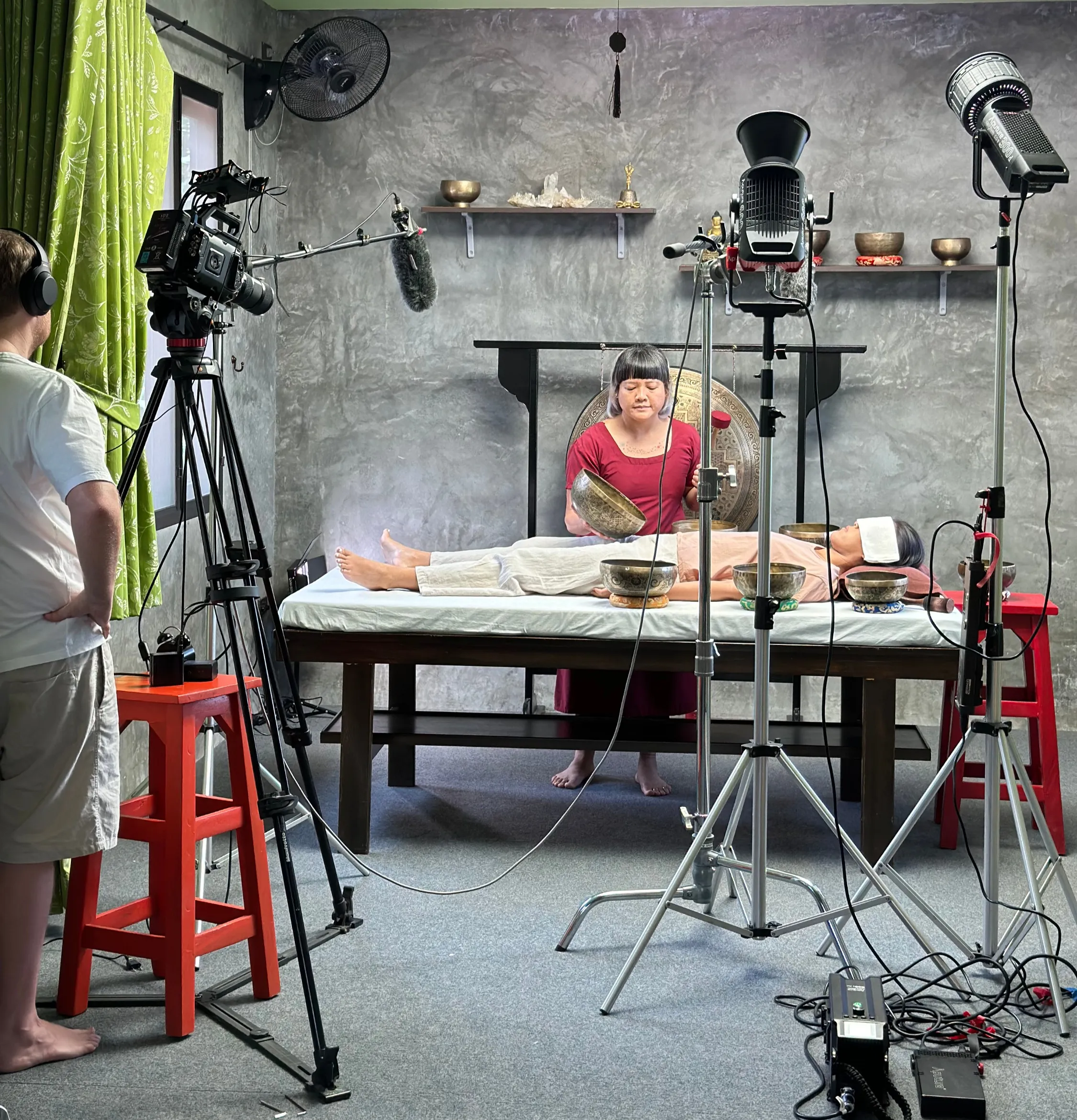
Private training is one-on-one, from start to finish. You get full attention, the pace follows you, and the dates are built around your schedule. This is what I teach at Attuned Studio. Five days can run in a row or be split across two weekends.
Group training gives you the energy of learning alongside other students. In collaboration with Jungala Phuket, a group training runs at my studio three times a year, with the same complete curriculum.
Online training is for people who cannot come to Thailand. You study pre-recorded lessons at your own pace, with live support calls each month.
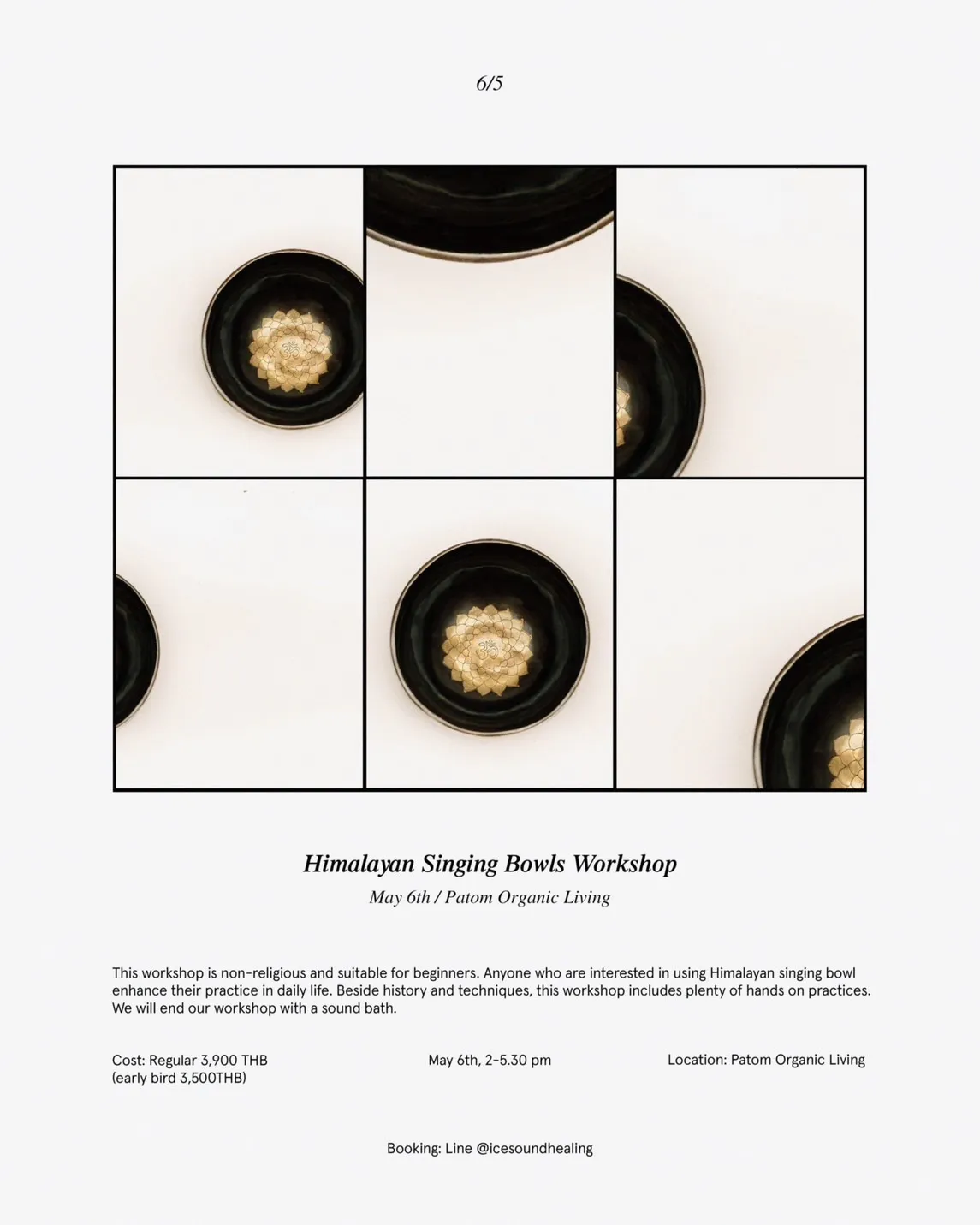
A half-day workshop is the place to start if you are curious but not ready to commit. You learn the basics, play the bowls, and you will know by the end whether you want to go further.
You can compare all four on the training page.
Basic or advanced training?
The difference is in what you can offer afterwards.
The basic course is two full days. It covers the history of sound healing, singing bowls, the seven chakras, and self-healing, so you can deepen your own practice and offer one-on-one chakra balancing sessions.
The advanced course is five full days. It includes everything in the basic course, plus group sound baths and more one-on-one sessions: brainwave entrainment, bowl massage and warm water therapy.
If you only want sound healing for yourself and the people close to you, basic is enough. If you want to hold group sessions or build a practice, advanced gives you the full range.
What I wish I had known before my training
I came to sound healing because I needed it myself. After years as cabin crew I could not sleep and did not feel like myself. Sound helped, so I trained.
What nobody told me is that the training is the beginning, not the end. The certificate gives you a foundation. Confidence comes from practising, first on yourself, then on friends, then with people you do not know. You do not need to feel ready. You need to start.
If that is where you are now, I wrote about starting a sound bath business and what I would do differently.
Choosing your training
A good sound healing training in Thailand teaches you to understand the bowls, play them well, choose your own instruments, and practise until it feels natural. Ask the right questions, choose the format you will actually finish, and do not wait to feel completely ready.
The right training is the one that gets you holding your own sessions.
Still not sure which training is right for you?
My private practitioner training takes you from zero to fully equipped, one-on-one at Attuned Studio in Bangkok, on dates that fit your life. It is open to complete beginners and to anyone who already works in wellness and wants to add sound to what they offer.